If you've been following along with our Clean Beauty 101 series, you know we're all about calling out the sneaky stuff hiding in your skincare products. And today? We're tackling the biggest loophole in the entire beauty industry: fragrance.
Yep, that innocent little word on your ingredient label could be hiding literally thousands of chemicals. And we're not being dramatic here, we're talking about a legal loophole that lets brands keep you completely in the dark about what you're putting on your skin.
Let's break it down. 🔍
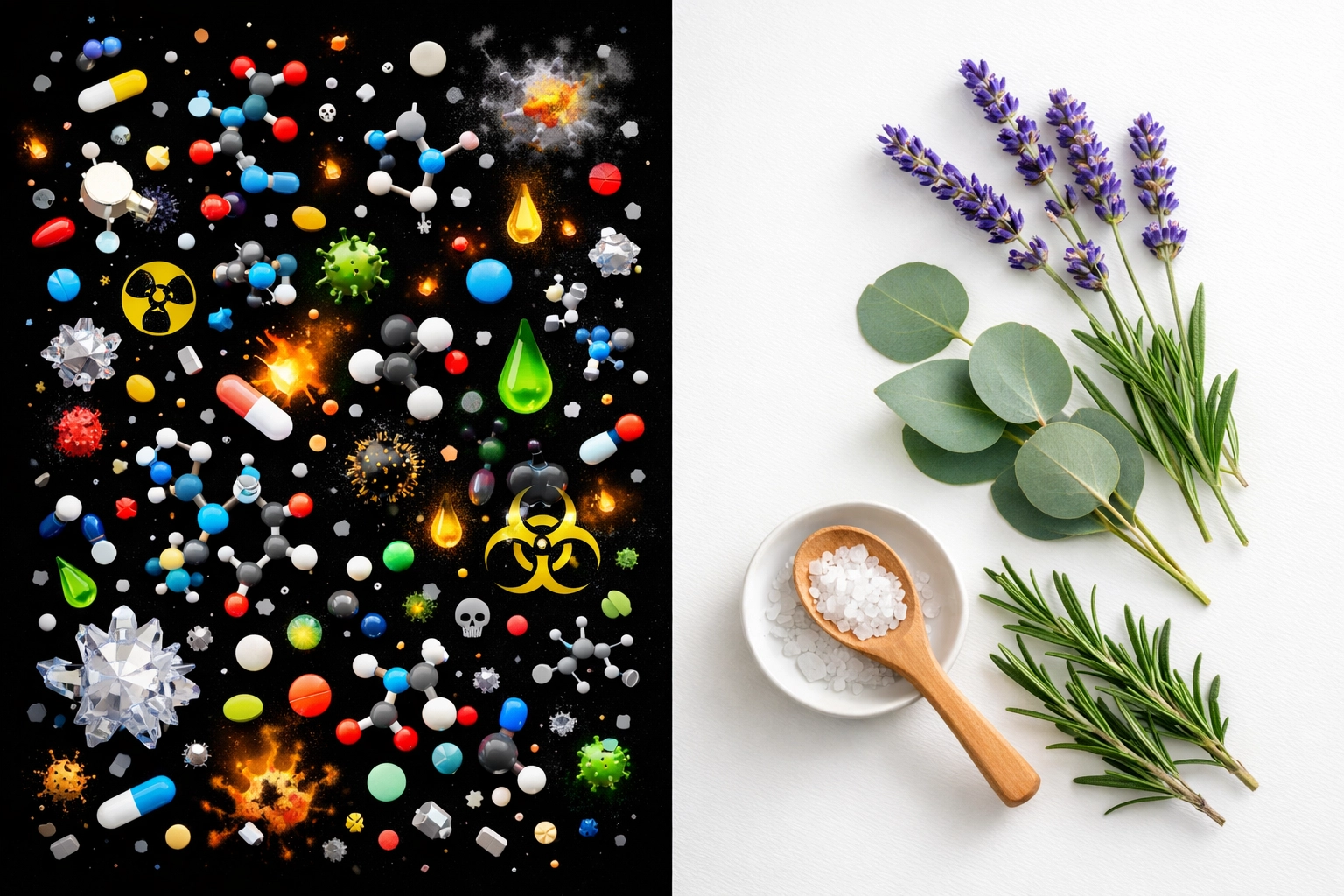
The Fragrance Loophole: A Legal Black Box
Here's the thing that'll blow your mind: when a product lists "fragrance," "parfum," "perfume," or even "aroma" on the label, it can contain anywhere from 3,000 to 4,000 separate chemical ingredients. And companies don't have to tell you what a single one of them is.
Why? Because fragrance formulations are protected as "trade secrets." It's essentially the beauty industry's get-out-of-transparency-free card.
Think about that for a second. You're reading ingredient labels, trying to make smart choices, avoiding parabens and sulfates... and then BAM, "fragrance" shows up and could literally contain any combination of thousands of chemicals, many of which you're actively trying to avoid.
It's like ordering a mystery smoothie and being told, "Don't worry about what's in it, it's a secret recipe!" Uh, no thanks. 🚫
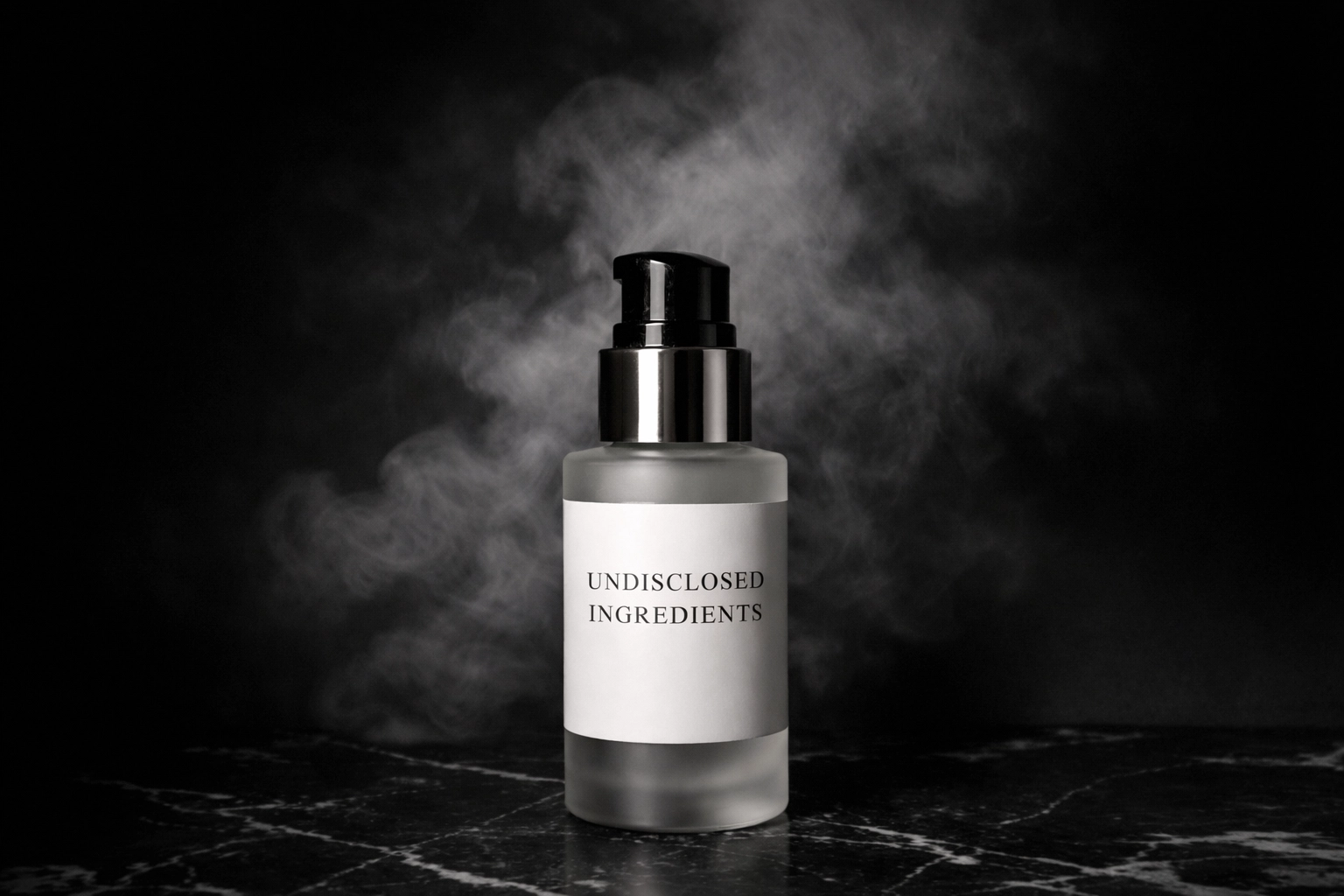
What's Actually Hiding in "Fragrance"?
So what's lurking behind that vague little word? Spoiler alert: it's not pretty.
Back in 1989, the US National Institute of Occupational Safety and Health evaluated 2,983 fragrance chemicals. Out of those, 884 were identified as toxic substances. Let that sink in. That study was done over 35 years ago, and the fragrance industry has only gotten more complex since then.
Here are some of the usual suspects hiding under the "fragrance" umbrella:
Phthalates: The Hormone Hijackers
Phthalates are plasticizers added to fragrances to make them last longer on your skin. Sounds helpful, right? Except they're also linked to:
- Hormonal disruptions
- Birth defects
- Reproductive issues
- Reduced effectiveness of certain cancer treatments
Europe banned phthalates from personal care products years ago. But in many other countries? They're still slipping into products without disclosure because, you guessed it, they're hidden under "fragrance."
Parabens: The Estrogen Imposters
Yep, those parabens you've been avoiding in your shampoo? They can show up in fragrances too. These preservatives mimic estrogen in your body and have been linked to disrupted hormone function and increased breast cancer risk.
Synthetic Colors and Chemical Solvents
Many fragrances also contain synthetic dyes (some of which are carcinogenic) and chemical solvents like methanol, which is toxic to both humans and wildlife and can mess with your nervous system.
The EPA found that 100% of perfumes tested contained toluene, a toxic volatile organic compound. Every. Single. One.
The Cumulative Effect: Death by a Thousand Scents
Here's where it gets really concerning. The average person in North America uses between 17 and 21 scented products every single day. Your body wash, shampoo, conditioner, deodorant, lotion, face cream, hand soap, laundry detergent, dryer sheets, air fresheners... the list goes on.
That's a LOT of fragrance exposure. And all those undisclosed chemicals? They add up.
According to the FDA, fragrances are responsible for 30% of all allergic reactions. And get this: 70% of people with asthma develop respiratory symptoms when exposed to perfumes.
Common symptoms people report include:
- Headaches and migraines
- Dizziness
- Allergic rashes
- Skin discoloration
- Violent coughing and vomiting
- Contact dermatitis
- Respiratory issues
And that's just the immediate stuff. We're still learning about the long-term effects of chronic exposure to these chemical cocktails.
Why This Matters for Your "Dirty Dozen" Awareness
Remember our Greenwashing Guide where we talked about the Dirty Dozen ingredients? A recent Canadian study found that 80% of personal care products tested contained at least one of these problematic ingredients, and over half contained more than one.
Fragrance is the perfect hiding spot for these chemicals. It's the Trojan Horse of the beauty world. A product can have a "clean" looking ingredient list, but that single word, fragrance, could be smuggling in half the Dirty Dozen without you knowing.
That's why at Hyssop Beauty Apothecary, we're obsessed with transparency. And we mean actually transparent, not the greenwashed version.
How We Do Fragrance Differently
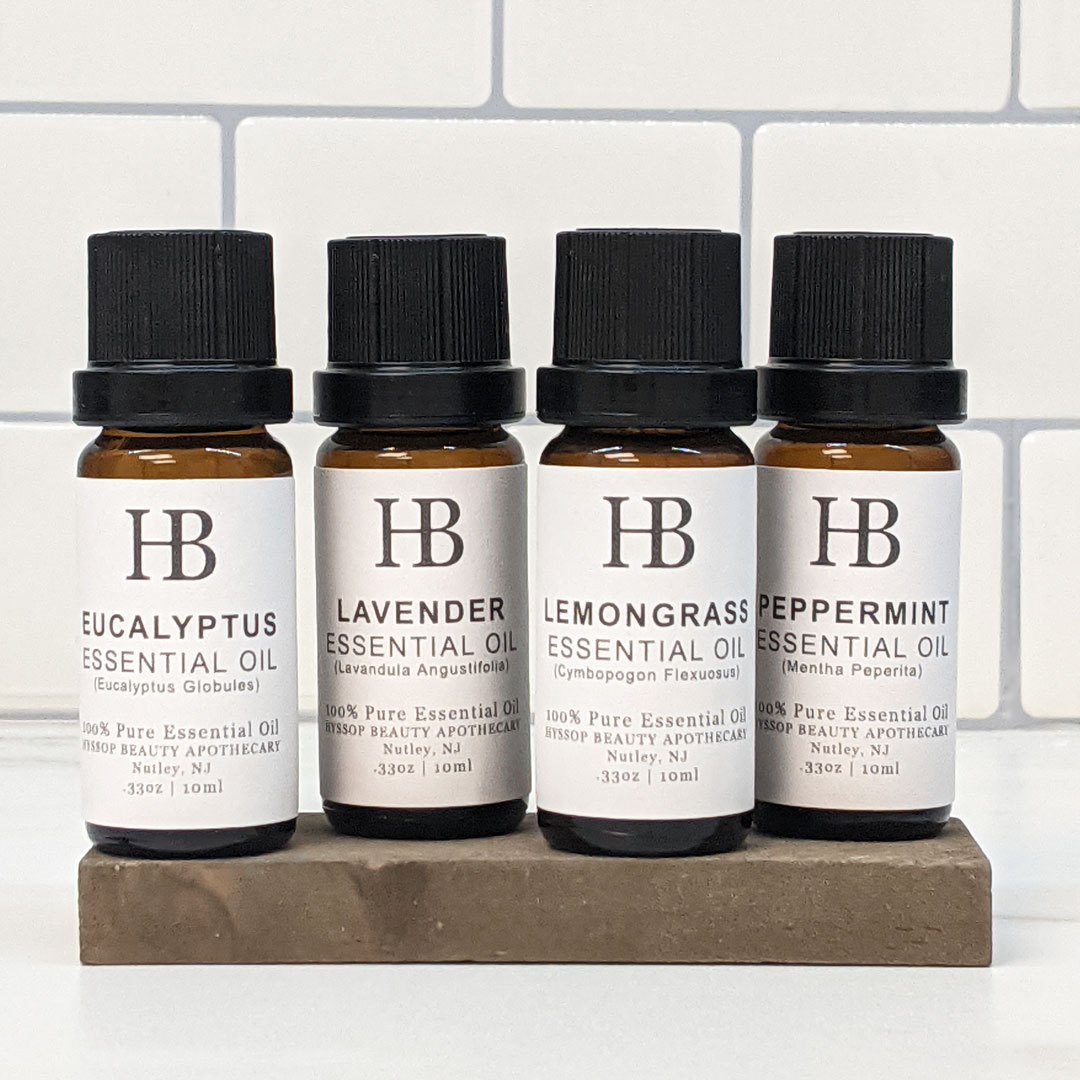
When we say our products smell amazing, we're not hiding anything. Every single scent in our skincare collection comes from pure, natural essential oils. And we list exactly which ones.
Take our bath and body oils, for example. When you see "eucalyptus, rosemary, and mint" on the label, that's actually what's in there. Not eucalyptus-scented mystery chemicals. The actual plant extracts.
Our approach is simple:
- Pure essential oils only – No synthetic fragrances, ever
- Complete transparency – Every scent ingredient is listed
- Therapeutic benefits – Essential oils bring actual skincare benefits beyond just smelling nice
- No trade secret BS – You deserve to know what you're putting on your skin
The difference between synthetic fragrance and natural essential oils isn't just about being "natural" for the sake of it. Essential oils like lavender, tea tree, and rosemary have documented therapeutic properties. They're working with your skin, not just sitting on top of it smelling pretty while potentially causing harm.
How to Protect Yourself
Reading labels is your superpower, but you've got to know what to look for:
Red flags:
- "Fragrance"
- "Parfum"
- "Perfume"
- "Aroma"
Green flags:
- Specific essential oils listed by name (like "lavender essential oil")
- "Fragrance-free" or "Unscented" (though watch out, some "unscented" products use fragrance to mask chemical smells)
- "Scented with essential oils" with the specific oils disclosed
And here's a pro tip: companies that are truly committed to clean beauty will be proud to tell you exactly what's in their products. If a brand is vague about their scent ingredients, that's a red flag.
The Bottom Line
"Fragrance" might seem harmless, even nice!, on a label. But it's actually the beauty industry's biggest loophole, allowing brands to hide thousands of potentially harmful chemicals without your knowledge or consent.
Your skin absorbs up to 60% of what you put on it. And with the average person using nearly 20 scented products daily, that exposure adds up fast.
The good news? You have the power to choose differently. By supporting brands that commit to full transparency (hey, that's us! 👋), you're voting with your dollars for a beauty industry that respects your right to know what you're putting on your body.
At Hyssop Beauty Apothecary, we believe you deserve products that smell incredible and are completely transparent about every single ingredient. No mystery chemicals. No trade secrets. Just pure, natural botanicals that actually nourish your skin.
Because real beauty shouldn't come with a side of secrecy.
Got questions about any of our ingredients? We're always happy to talk through what's in our products and why. That's what transparency looks like. 🌿✨